I don’t know, but I suspect it is “occlusion.” That is…I think the role of “occlusion” in AP is not under-appreciated, but unappreciated. I would ask that you observe all the broken-off teeth that come into your office with GP exposed, and they rarely have any symptoms, and also rarely have radiographic evidence of AP. There was a case report many years ago of a lower molar that had significant findings that went unaddressed, and then a followup with reduced findings. What one notices in that case was that the coronal portion of the tooth was largely missing, and thus was not likely to be in significant function.
I will post a case that will have your head spinning.


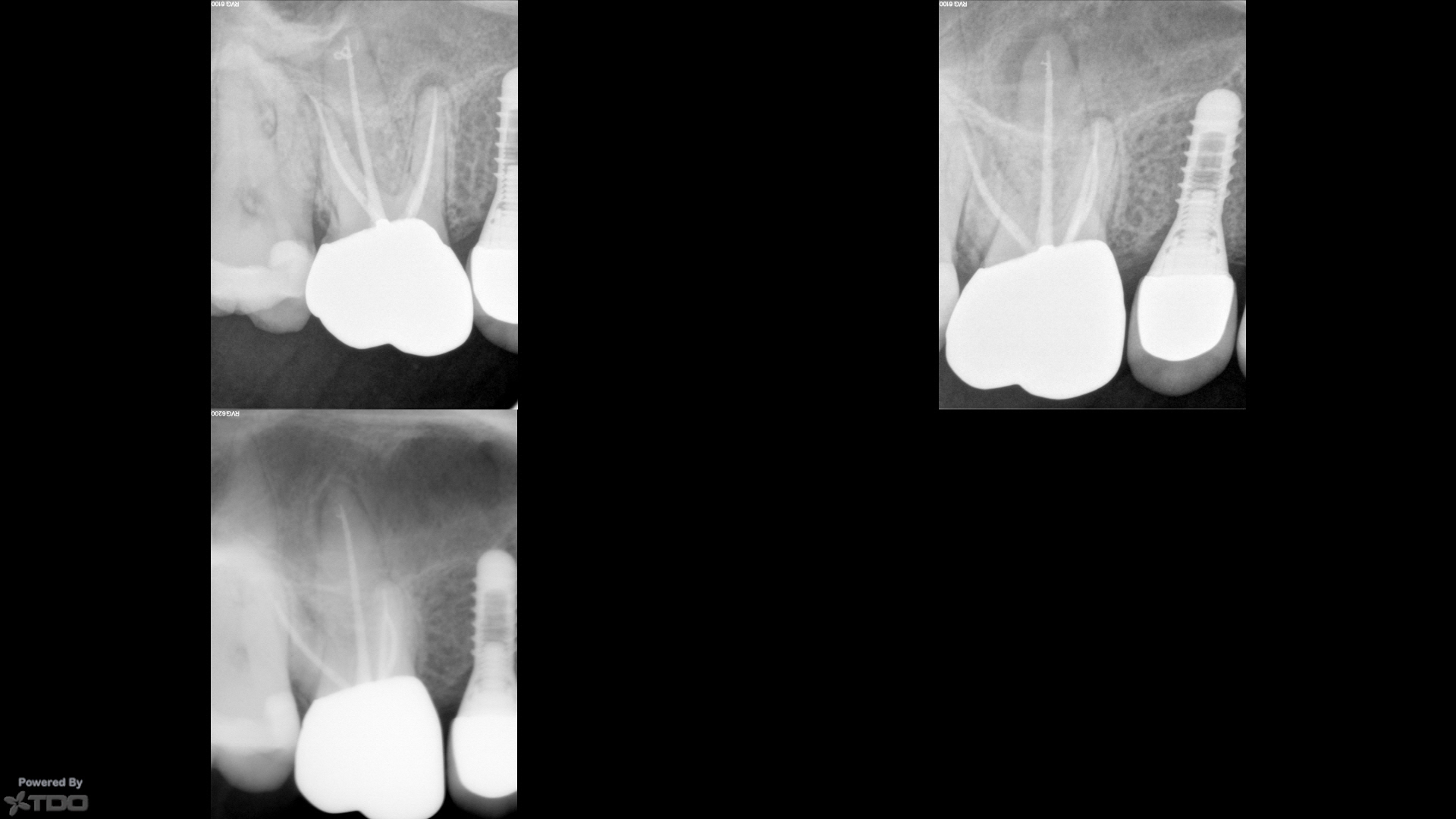
Intriguing. What is the mechanism behind this? Is there a way to determine if a tooth will proceed to this state at the time of consultation?
Hi Brandon,
I don’t know, but I suspect it is “occlusion.” That is…I think the role of “occlusion” in AP is not under-appreciated, but unappreciated. I would ask that you observe all the broken-off teeth that come into your office with GP exposed, and they rarely have any symptoms, and also rarely have radiographic evidence of AP. There was a case report many years ago of a lower molar that had significant findings that went unaddressed, and then a followup with reduced findings. What one notices in that case was that the coronal portion of the tooth was largely missing, and thus was not likely to be in significant function.
I will post a case that will have your head spinning.